UHF radio vs internet corrections for RTK
The communication method changes field logistics, but it does not replace measurement quality control.
Choose around the operating environment
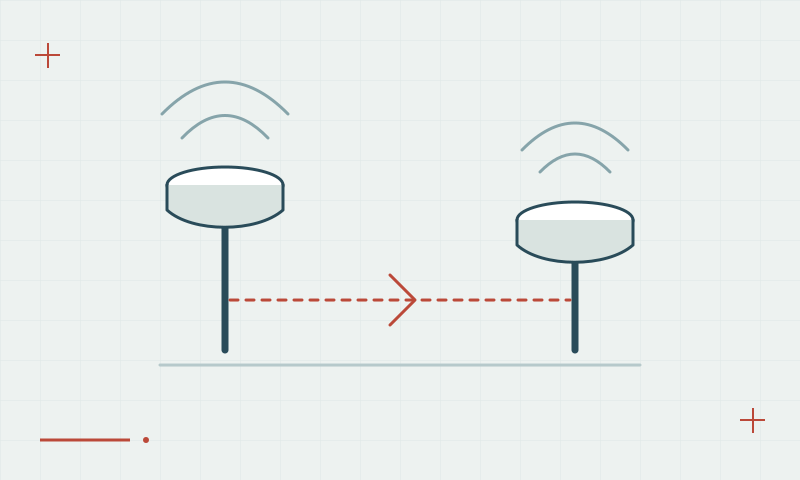
UHF corrections depend on radio configuration, terrain, obstructions and the installed antennas. Internet corrections depend on data coverage, the caster and the chosen service. Neither transport method independently establishes coordinate accuracy, and a stable connection can still deliver an unsuitable correction stream.
Continue learning NTRIP explained: caster, client and mountpoint
Plan for interruptions before they occur
Test the planned communication method at the site and monitor correction age during operation. Confirm radio use with the applicable local requirements and service access with the provider. Where supported, preserve raw observations and define a recovery procedure rather than assuming the connection will remain continuous.
Continue learning Correction age and latency: why a connected rover can still struggle
Practical checklist
- Test communication across the actual survey area.
- Confirm radio and service configuration before work.
- Define what happens when corrections are interrupted.
Plan your GNSS setup
Compare the EQ10 and EQ20 receiver specifications, then discuss the configuration and support your project needs.
Compare GNSS receivers