Base and rover setup: getting the relationship right
A precise relative measurement still depends on the base position, antenna setup and coordinate settings.
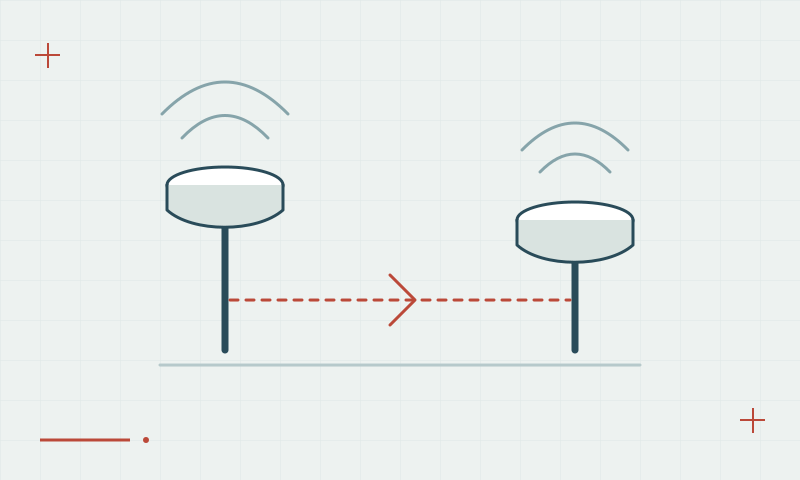
The base anchors the measurement
In a base-and-rover workflow, the rover solution is connected to the reference receiver position. An error in the entered base position can shift the entire survey. Both receivers also need correct antenna-height handling and compatible observations for the intended correction and processing method.
Continue learning Choosing a suitable GNSS base station site
Make the setup independently checkable
Record the base mark identifier, coordinate source, antenna reference and setup photographs. Check the rover on a known point before collecting new features. Repeat a check after changing the base configuration, because a working radio connection alone does not prove that the coordinate setup is correct.
Continue learning Antenna height: a small setup detail with large consequences
Practical checklist
- Record the base mark and coordinate provenance.
- Measure and document both antenna heights.
- Check the rover before and after configuration changes.
Plan your GNSS setup
Compare the EQ10 and EQ20 receiver specifications, then discuss the configuration and support your project needs.
Compare GNSS receivers