How RTK GNSS turns observations into precise positions
RTK combines simultaneous base and rover observations with a real-time data link.
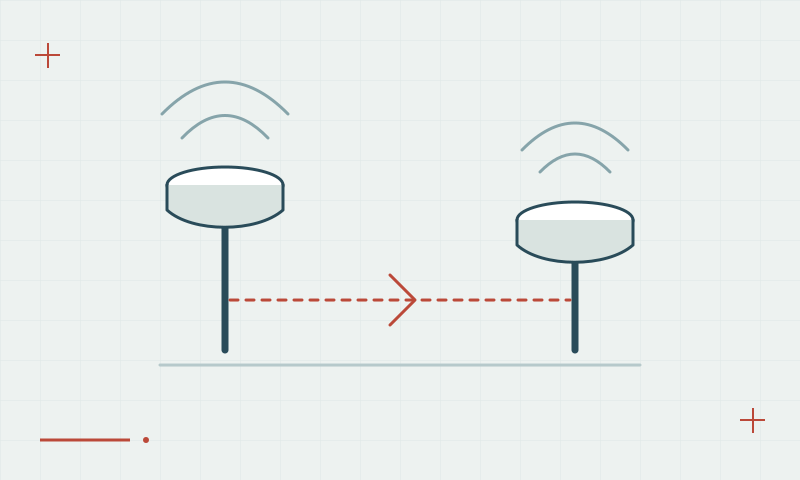
A base, a rover and a communication link
The base occupies a known position and observes satellite signals at the same time as the rover. By processing related measurements, RTK can reduce several shared error effects and resolve carrier-phase ambiguities. The resulting rover coordinates depend on the base coordinates as well as the observations.
Continue learning RTK Fixed vs Float: what the status means
Treat accuracy as a complete workflow
A fixed solution is only one part of quality control. Incorrect base coordinates, antenna height or coordinate settings can introduce systematic errors even while the receiver reports fixed. Start with documented control, maintain the correction link and compare independent observations throughout the job.
Continue learning Base and rover setup: getting the relationship right
Practical checklist
- Verify the base coordinates and antenna reference.
- Monitor corrections and the rover solution status.
- Measure a known check point before production work.
Plan your GNSS setup
Compare the EQ10 and EQ20 receiver specifications, then discuss the configuration and support your project needs.
Compare GNSS receivers