Evaluating a GNSS receiver for your actual field workflow
Compare complete survey tasks, support and data handling rather than choosing equipment from one headline specification.
Define the work before comparing products
A receiver evaluation should begin with the tasks the team needs to complete. List typical environments, coordinate requirements, correction arrangements and deliverables. Open field mapping, obstructed asset work and repeated control occupations create different operational demands. Without that context, a comparison can become a contest between attractive specifications that do not resolve the practical question of whether the system fits the crew's work.
Separate essential capabilities from conveniences. Required signal support, usable data formats and compatibility with the correction source may be fundamental. An interface feature may save time but should be tested in the actual workflow. Write these distinctions before a demonstration so the evaluation is not shaped entirely by whichever function is easiest to show. Keep the final decision tied to tasks and evidence rather than an unstructured impression after a short trial.
Continue learning Choosing EQ10 or EQ20 for a GNSS surveying workflow
Compare the complete system
The receiver is only one component. Include controller software, poles, adapters, power, communications, processing tools and export capability. Determine what is included and what requires another license, device or subscription. A low equipment price may not describe the cost of an operational system, while a more extensive package may include components the crew does not need. Record the assumptions so the comparison remains fair.
Inspect the physical workflow. Consider setup time, readable controls, equipment weight, mounting geometry and battery handling under the intended field conditions. Avoid turning a brochure statement into a guarantee that every environment will be suitable. Ask for the documented operating conditions and test the features that materially affect production. A system that performs well in a demonstration should still be evaluated for how the crew will assemble, carry and maintain it.
Continue learning Evaluating multi-frequency GNSS receivers for real projects
Verify compatibility early
Test the proposed correction source and message configuration with the actual receiver and firmware. Confirm that usable data arrive and that coordinates agree with suitable checks. A successful connection icon is not a complete interoperability result. If the team uses several base and rover models, evaluate the combinations that will actually occur in the field rather than assuming one standards label approves every arrangement.
Check data access and export formats. Confirm whether raw observations can be retained, how they are converted and which software is needed later. Test a representative final file in the destination GIS or CAD application. Point names, feature attributes, heights and reference definitions should survive the route. This can reveal a workflow limitation that would remain invisible in a demonstration focused only on the number of points collected per minute.
Continue learning Choosing a RINEX observation interval for GNSS work
Design a meaningful field trial
Use representative sites and independent checks. Include open ground and the difficult environments central to the business, while respecting the equipment instructions. Keep the coordinate reference and check procedure consistent across products. Record both successful and unsuccessful attempts. A comparison that keeps only the best result from each system gives little information about repeatability, operational interruptions or the work required to obtain an accepted coordinate.
Define what the trial measures. Time to a usable solution, check agreement, recovery after interruption and export effort are different outcomes. Do not combine them into an unexplained score. Preserve the configuration and trial conditions so the result can be interpreted fairly. A short test cannot establish every long term reliability question, but it can provide concrete evidence for the capabilities most relevant to the team's routine work.
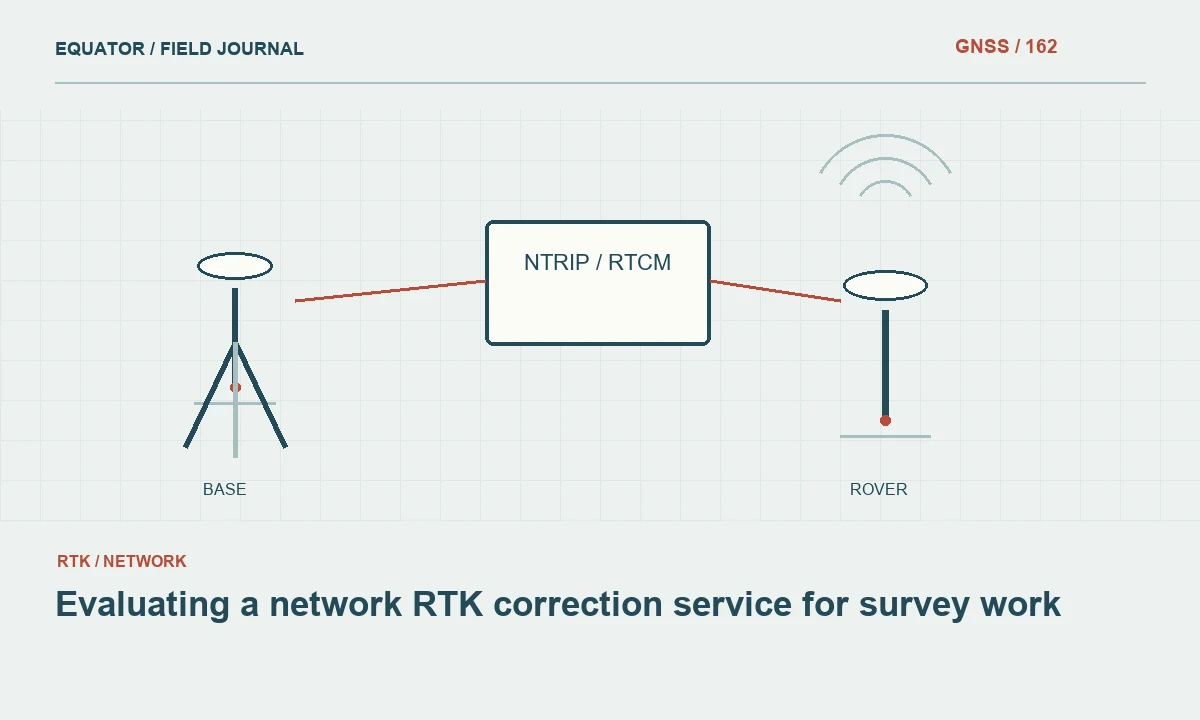
Continue learning Evaluating a network RTK correction service for survey work
Examine specialized functions carefully
If a receiver offers tilt, visual or laser assisted workflows, identify the required initialization, field conditions and data record. Test the feature against suitable references and inspect how the resulting point is represented in the export. A convenient way to reach a difficult feature may add operational value, but it should not be accepted solely because the demonstration looks fast or visually impressive.
Compare the published specifications of the exact models being considered. For Equator products, use the supplied EQ10 and EQ20 brochures as product references and ask about the intended configuration. Keep manufacturer capability statements distinct from the results of your own trial. This allows a reviewer to understand which claims are documented features, which were demonstrated and which remain untested under the organization's actual working conditions.
Continue learning Choosing EQ10 or EQ20 for a GNSS surveying workflow
Evaluate support and change management
Ask how the team will obtain training, repairs, firmware guidance and replacement components. Confirm the support route for interoperability and data conversion questions. A receiver that fits the initial trial can still create difficulty if a later update changes the workflow and no one can explain the new behaviour. Include documentation quality and the ability to reproduce an approved configuration in the evaluation.
Plan how updates will be tested before production. Record firmware and software versions during the trial and ask whether settings can be backed up or restored through supported methods. Avoid assuming that every future version will behave identically. A practical procurement decision includes how the organization will maintain the system, train new operators and preserve survey evidence over its expected working life.
Continue learning Evaluating multi-frequency GNSS receivers for real projects
Compare operating costs transparently
List equipment, software, correction access, mobile data, training, maintenance and expected replacement items. Use actual quotations and current provider information where a financial decision depends on them. Do not invent a universal payback period based on an idealized point count. Estimate productivity from representative accepted work, including checks, recovery, data transfer and office review rather than only the fastest collection sequence.
Consider the consequences of downtime and the availability of a tested alternative. A spare component, compatible workflow or clear support arrangement may matter more than a small difference in an isolated specification. Keep these tradeoffs explicit. The evaluation should show how the system supports the business process, including periods when something fails, rather than assuming uninterrupted ideal conditions throughout every campaign.
Continue learning Choosing a RINEX observation interval for GNSS work
Write a decision record others can review
Summarize requirements, tested configurations, results, costs and remaining uncertainties. Keep the comparison focused on the intended tasks and preserve the underlying trial records. If one model is selected because a particular workflow matters, explain that connection clearly. Avoid declaring a universal best receiver when the evidence only supports a choice for a specific crew and project mix.
For example, a team delivering asset GIS data may find export consistency and field attributes decisive, while another team may prioritize a different observation method. Both decisions can be reasonable when grounded in actual requirements. A useful receiver evaluation turns specifications into tested operational questions. The resulting purchase is easier to justify, and the approved trial configuration becomes a starting point for training, preflight and future quality checks.
Ask the demonstration team to retain a sample raw file and final export from the trial. Those assets allow the organization to test its own processing and client delivery route after the demonstration. A feature that appears usable on the supplied screen may still require an additional tool or convention that matters to the purchase decision.
Continue learning Evaluating a network RTK correction service for survey work
Practical checklist
- Compare complete workflows and required accessories.
- Run representative trials with independent checks and tested exports.
- Separate brochure capabilities, demonstrated results and remaining uncertainties.
Plan your GNSS setup
Compare the EQ10 and EQ20 receiver specifications, then discuss the configuration and support your project needs.
Compare GNSS receivers