Evaluating multi-frequency GNSS receivers for real projects
A multi-frequency receiver should be evaluated as part of the antenna, corrections, software and field procedure that will deliver the project.
Begin with the intended work
Multi-frequency GNSS equipment can observe signals on more than one frequency, supporting positioning methods that use their different characteristics. The practical benefit depends on the signals, receiver implementation, antenna, correction information and processing workflow. Start with the actual tasks the organization performs: open control, urban mapping, construction work, long baseline processing or moving platform integration. A specification comparison becomes more useful when it is tied to those tasks.
Define the required deliverables and acceptance evidence before testing equipment. Identify horizontal and vertical needs, coordinate frameworks, correction services, raw data requirements and operational constraints. Avoid choosing a receiver solely because it lists the greatest number of channels or constellations. Those attributes can be relevant, but they do not independently establish the quality of a coordinate collected at a difficult site with an unsuitable setup.
Continue learning Multi-frequency GNSS: beyond the L1 label
Check signal support across the workflow
Review the exact signals supported by the receiver and antenna, then confirm controller, correction and processing compatibility. A capability available in raw tracking may not be available in the chosen real time workflow. Firmware, configuration and licensing can matter for some equipment, so evaluate the actual unit and software package offered. Preserve the tested configuration rather than relying only on a brochure that describes a broader product family.
Ask how raw observations are exported and whether the intended processor supports their format and observation types. Test a complete collection, export, processing and handover cycle. This reveals practical issues that a successful field initialization does not expose, such as missing antenna metadata, unsupported observations or unclear coordinate definitions in exported files. The receiver should fit the organization's complete data chain, not just the first screen shown during a demonstration.
Continue learning Evaluating a GNSS receiver for your actual field workflow
Understand what extra frequencies can and cannot solve
Multiple frequencies support methods for addressing ionospheric effects and can contribute to robust ambiguity processing. Their value depends on the method and observation conditions. They do not eliminate every source of error. Multipath, obstruction, wrong antenna height, unstable centering, incorrect reference coordinates and incompatible height models can still undermine a result even when several frequencies are tracked successfully.
Use this distinction when reviewing marketing claims. Ask which conditions, correction source and verification method support a stated performance figure. A laboratory or open field result may be relevant without representing every project environment. The procurement evaluation should include independent checks and realistic site conditions so the organization understands where the equipment strengthens its workflow and where another technique or procedure remains necessary.
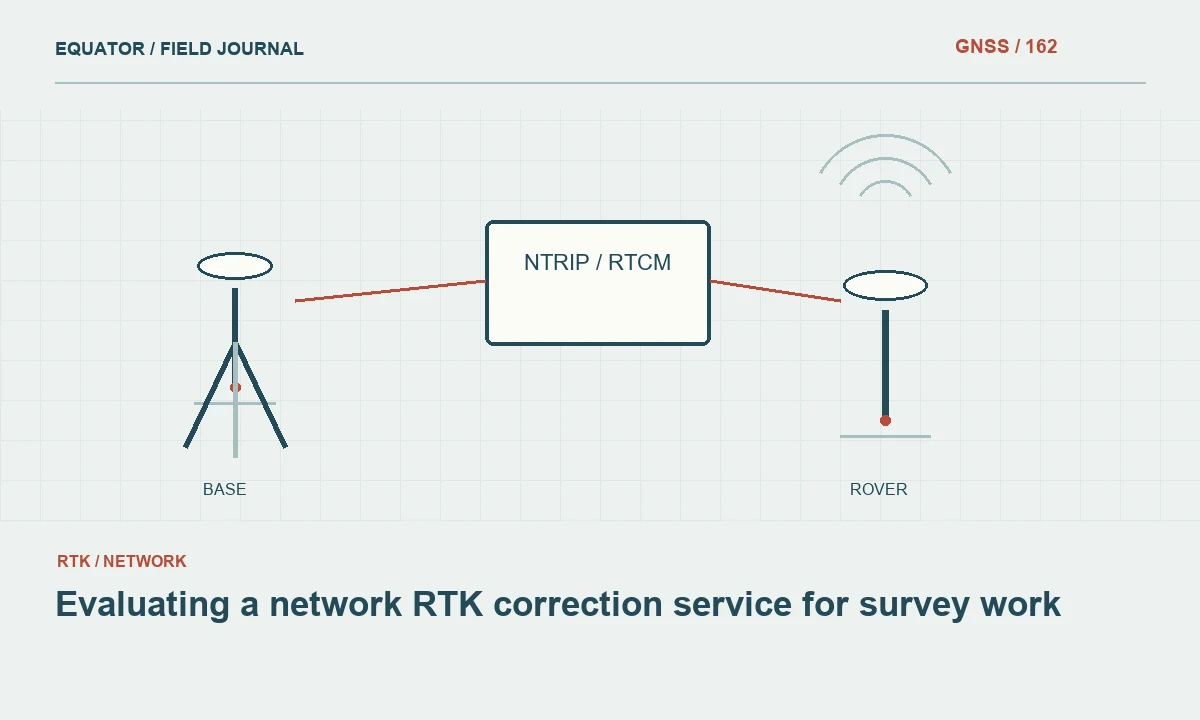
Continue learning Evaluating a network RTK correction service for survey work
Design a representative field trial
Select test sites that reflect actual work: suitable open control, moderate obstruction and any difficult environment important to the organization. Use clearly identified reference points and a documented coordinate framework. Keep antenna setup and height procedures consistent, and retain individual occupations. A test that changes equipment, correction service and local transformation simultaneously makes it difficult to identify why the results differ.
Evaluate initialization behavior, continuity, repeat occupations and independent check discrepancies. Review horizontal and vertical components separately. Include enough operational diversity to expose practical weaknesses without pretending that a small trial establishes a universal probability of success. Record test conditions and limitations. A candid representative trial is more valuable than a large collection of favorable demonstrations whose reference coordinates and setup details are unclear.
Continue learning Choosing a RINEX observation interval for GNSS work
Test difficult conditions without normalizing weak evidence
At constrained sites, observe how the system reports degraded quality and how operators respond. Clear warnings, useful diagnostics and a practical recovery process can be as important as fast initialization under ideal conditions. Do not reward a receiver simply for continuing to display a fixed label when independent checks fail. The evaluation should assess whether the complete workflow helps crews recognize when a coordinate needs additional evidence.
Plan an approved alternative method for features that GNSS cannot measure credibly. The trial should establish operational boundaries rather than encourage staff to force every task through one instrument. Record where offset measurements, total station work or a different observation plan were needed. Those findings support realistic training and project estimates, while preventing a procurement decision from becoming an unsupported promise that difficult sites no longer require judgment.
Continue learning Multi-frequency GNSS: beyond the L1 label
Review usability and configuration control
Assess whether operators can identify the active coordinate system, correction source, antenna height and solution quality without navigating confusing screens. Test project templates, export conventions and recovery after a connection interruption. A technically capable receiver can still produce costly mistakes if the workflow makes critical settings difficult to verify. Include representative crew members in the trial and record concrete operational issues rather than only subjective impressions.
Check how configuration and firmware changes are managed. The organization should be able to retain approved settings and associate collected data with the relevant equipment state. Review support, documentation and the process for reporting a reproducible problem. These capabilities help maintain consistent survey practice over time, especially when several crews share equipment or when a project continues across multiple software updates.
Continue learning Evaluating a GNSS receiver for your actual field workflow
Consider the full operating cost
Compare the cost of corrections, software, accessories, batteries, training, support and data handling alongside the receiver price. Verify current commercial terms directly when procurement decisions are made. A lower initial price may not be the best value if the workflow requires substantial manual repair or incompatible software. Conversely, a feature that the organization never uses may not justify additional complexity or cost.
Use the trial evidence to estimate practical productivity, including setup, checks, export and office review. Avoid counting only the time needed to store one favorable point. A receiver that collects quickly but creates ambiguous metadata can shift effort into the office. The relevant measure is reliable delivery of accepted project data through the complete process, with known limitations and a supportable operational method.
Continue learning Evaluating a network RTK correction service for survey work
Include a reproducible acceptance exercise
At the end of the trial, ask a staff member who did not conduct the demonstration to repeat the approved setup and produce a complete handover. This tests whether the equipment and documentation support normal organizational use. Record ambiguous settings, missing metadata and support needs. A device that performs well only when a specialist configures it may require a different training or support plan from one that crews can operate consistently within the organization's established verification procedure.
Continue learning Choosing a RINEX observation interval for GNSS work
Make the acceptance record reusable
Summarize the tested configuration, sites, reference information, results, limitations and required operating procedure. Keep raw observations and exports so future staff can revisit the evaluation. The outcome should identify suitable applications and training needs, not merely rank devices by one headline number. Where the trial was limited, state what remains to be verified before a new application is approved.
A strong multi-frequency receiver evaluation connects signal capability with real survey evidence. It recognizes the benefits of additional observations while retaining setup discipline, coordinate framework control and independent checks. That produces a procurement decision the organization can explain and a field method that crews can use consistently after the demonstration team has left.
Continue learning Multi-frequency GNSS: beyond the L1 label
Practical checklist
- Begin with the intended work.
- Include a reproducible acceptance exercise.
- Make the acceptance record reusable.
Plan your GNSS setup
Compare the EQ10 and EQ20 receiver specifications, then discuss the configuration and support your project needs.
Compare GNSS receivers