Cycle slips: what interrupted phase tracking can change
Loss of continuous carrier-phase tracking can require ambiguities to be resolved again.
An interruption changes the phase history
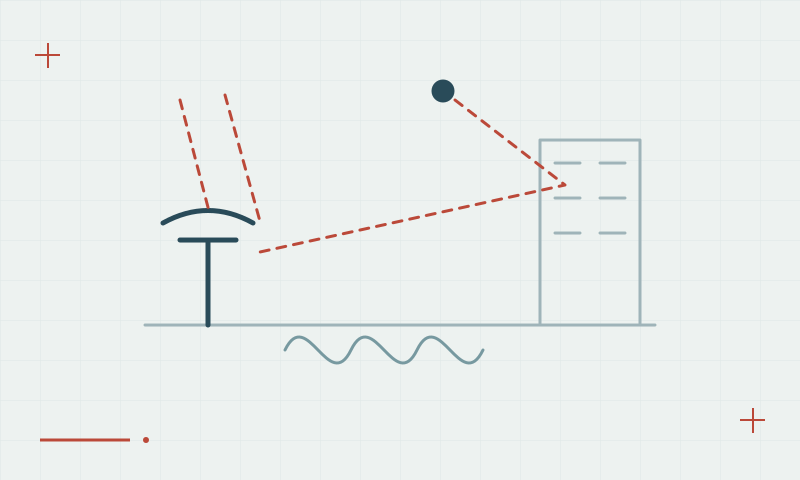
Carrier-phase processing depends on tracking the accumulated signal phase. A cycle slip introduces a discontinuity that the receiver or processing software must detect and handle. Obstructions, weak reception and tracking interruptions can contribute, so continuity matters even when the coordinate display appears to move smoothly.
Continue learning Code and carrier phase: two GNSS measurements
Check the affected observations
Inspect solution changes and processing diagnostics around interruptions. Reobserve important points after stable tracking and correction flow return. In post-processing, review how slips and data gaps were treated instead of assuming that a completed processing run means every epoch has the same reliability.
Continue learning RTK will not fix: a practical troubleshooting order
Practical checklist
- Note tracking interruptions and solution changes.
- Recheck critical points after stable tracking returns.
- Review cycle-slip and gap diagnostics during processing.
Plan your GNSS setup
Compare the EQ10 and EQ20 receiver specifications, then discuss the configuration and support your project needs.
Compare GNSS receivers