Planning GNSS battery rotation for full field sessions
Account for the receiver, controller and correction device so power changes do not create undocumented gaps or setup changes.
Plan power for the whole system
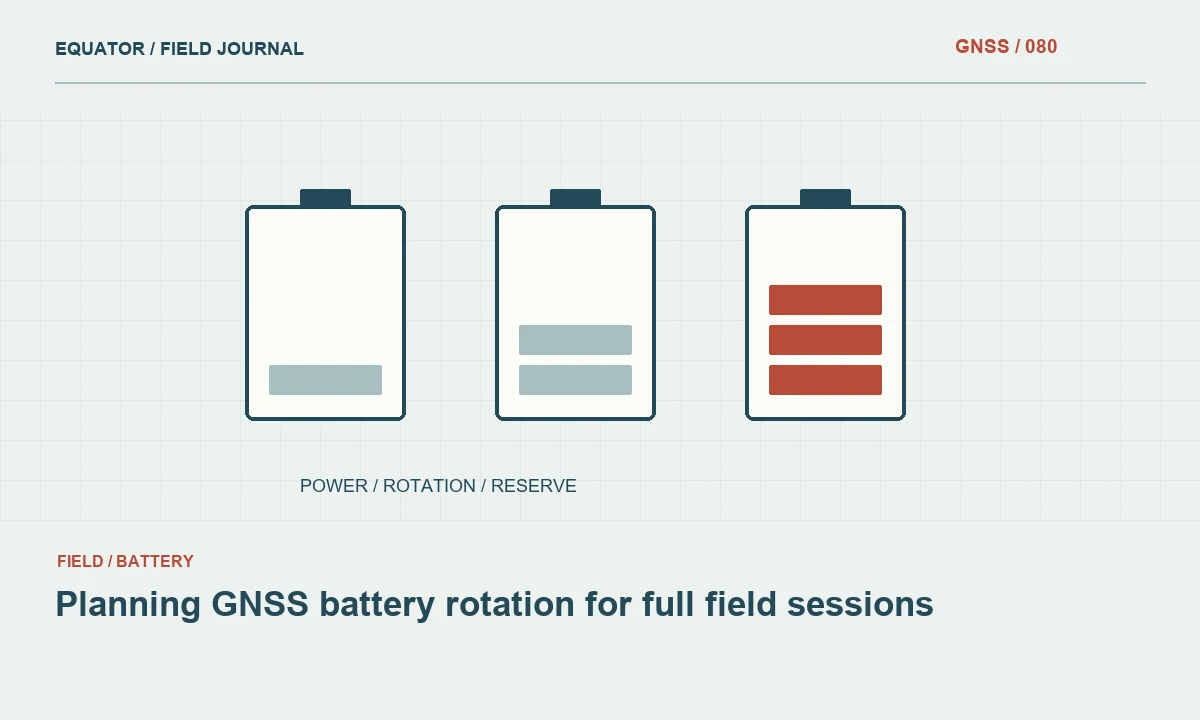
A GNSS field system may depend on several batteries: receiver, controller, radio, modem and a phone supplying mobile data. The session can stop when any essential component loses power, even if the main receiver remains fully charged. Map the actual equipment path and identify every powered device before estimating field endurance. A brochure runtime for one component does not describe the operating duration of the complete workflow.
Base the plan on the intended use and conditions. Logging, communications, display brightness and specialized functions can affect consumption. Battery age and environmental conditions matter too. Use manufacturer information and observed field performance without treating a single successful day as a universal guarantee. Record the assumptions and leave a practical margin appropriate to the work, especially where access makes an unplanned return expensive.
Continue learning IMU tilt compensation: benefits and verification
Identify and inspect batteries
Label batteries and record their condition through the equipment maintenance process. Inspect housings, connectors and locking mechanisms according to the manufacturer instructions. Keep unsuitable items out of normal service rather than returning them to the case as an undocumented spare. A battery that intermittently disconnects can create a difficult to diagnose receiver restart even when its charge indicator appears adequate.
Confirm charger compatibility and the available charging route before travel. A team may own enough batteries but still lack the correct charger or power arrangement at the project accommodation. Avoid improvising electrical combinations outside the equipment guidance. The practical objective is a predictable supply of serviceable power components, with enough identification that a weak battery can be traced and removed from the rotation instead of circulating between crews.
Continue learning Defining a local survey grid: origin, orientation and external connection
Build a rotation around the workday
Estimate the session duration for each device using the actual field arrangement. Plan charging and replacement points that fit the route and crew responsibilities. Keep charged and used batteries distinguishable. A simple labelled storage arrangement can prevent an operator from installing another depleted unit during a hurried change. Record which equipment depends on a power source that cannot be replaced without interrupting observations.
For a base receiver, consider the consequence of a restart on rover work and raw logging. For a phone hotspot, consider whether the connection will recover automatically and whether the correction client needs action. A power plan should include the recovery procedure, not merely the number of spare batteries. Different devices may require different checks after a change even when the physical replacement takes only a moment.
Continue learning Keeping useful time records in GNSS field surveys
Use supported external power arrangements
If external power is part of the workflow, use the manufacturer supported connection and operating conditions. Inspect cables and strain relief, and arrange the supply so it does not pull on the antenna or tripod. Keep the power system identified in the setup record when its operation affects continuity. A larger battery is not automatically an improvement if the connection is unreliable or the arrangement destabilizes the reference support.
Test the complete external power setup before relying on it at a remote site. Confirm startup, monitoring and the behaviour when the supply is disconnected under the approved test procedure. Do not assume that a device provides uninterrupted switching between sources unless that behaviour is documented and verified. The crew needs to know whether a change can preserve the observation interval or should be treated as a new operational event.
Continue learning Choosing and documenting a temporary GNSS base mark
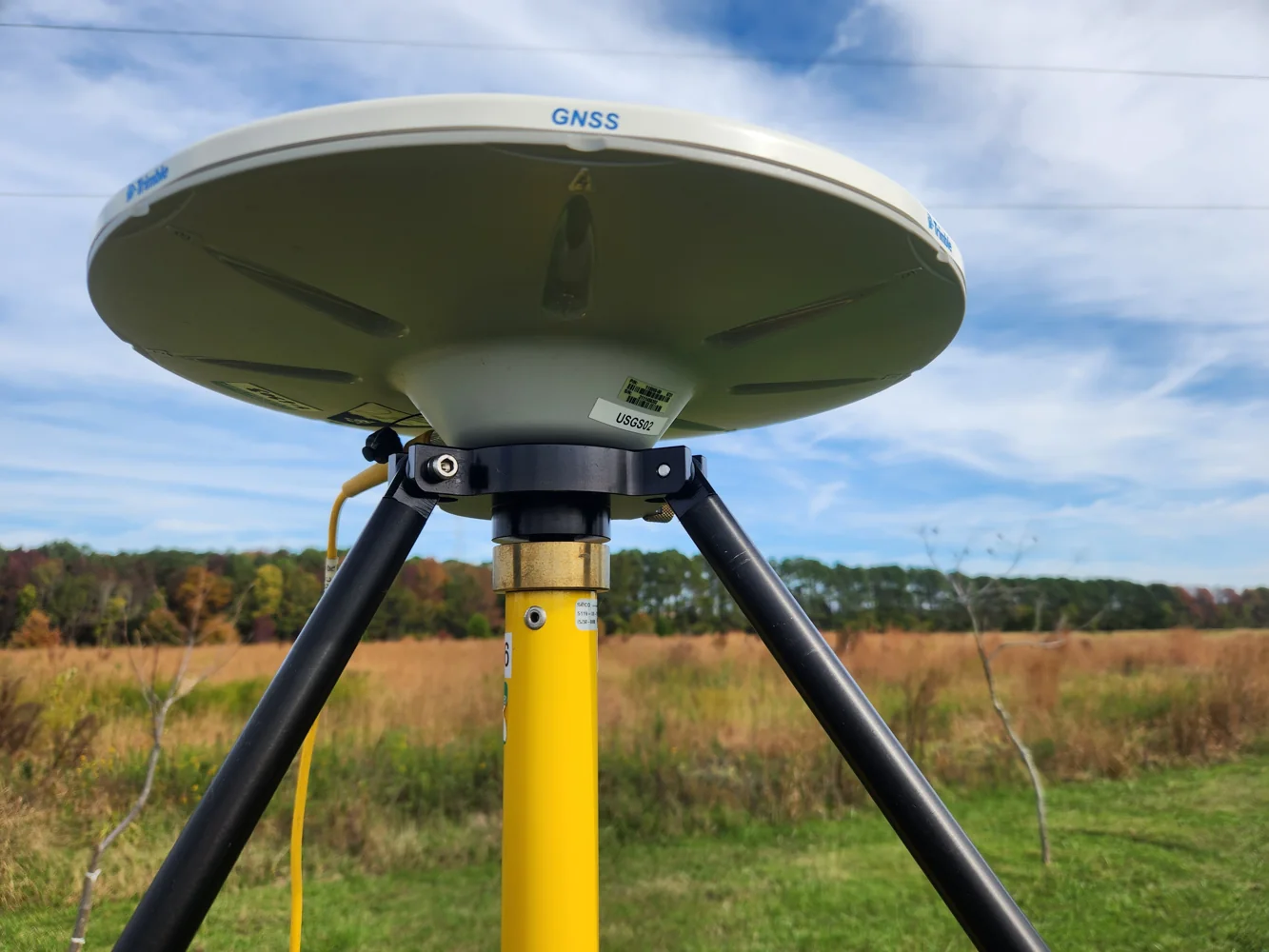
Change power with a clear record
Before an interrupting change, pause affected production and note the time. Confirm that required logs are saved or will close through the supported procedure. Preserve the active job and correction settings. After the change, inspect the receiver identity, mode, logging status and correction source. A restart may retain some settings while requiring the controller to restore others, so check the actual state rather than assuming the previous setup has returned.
For a base, recheck the physical support if the change involved touching equipment near the antenna. If geometry changed, make a new setup record and height measurement. For a rover, allow the required positioning state to recover and perform the project check before critical observations resume. A successful power light is not the same as a verified measurement state, particularly after a complete restart or correction link interruption.
Continue learning IMU tilt compensation: benefits and verification
Preserve observation continuity honestly
Record gaps and separate raw files where the receiver creates a new interval. Keep the event note linked to the affected setup and rover work. Do not merge files in a way that hides a meaningful interruption without preserving the originals. A later analyst needs to know whether missing epochs are expected and whether the physical or digital configuration changed at the same time.
Identify points collected near an unexpected shutdown for review. Some records may have been saved correctly and others may be incomplete; use the actual files and device behaviour to decide. Avoid both automatic acceptance and indiscriminate deletion. The power event should create a defined assessment interval. If the evidence is uncertain for an important point, repeat it as a new observation and preserve the reason for the repeat.
Continue learning Defining a local survey grid: origin, orientation and external connection
Use field experience to improve estimates
Track practical runtime by device and operating arrangement where the team needs reliable planning. Note significant changes in conditions or battery performance. A battery that consistently performs worse than its peers deserves inspection under the maintenance procedure. Keep the record linked to battery identifiers so the same weak unit does not repeatedly surprise different crews who each assumed it was a newly charged spare.
Review controller and phone power consumption as carefully as receiver consumption. Background applications or a high demand communications task can change the bottleneck in the system. The response may be a different supported charging arrangement, a revised rotation or another device, rather than simply buying more receiver batteries. Power planning works best when it follows the complete operational chain and the actual cause of interruptions.
Continue learning Keeping useful time records in GNSS field surveys
Include power status in handover
At the end of the day, separate charged, used and suspect components and record outstanding issues. Confirm that charging starts through the approved arrangement and that the next crew knows which batteries are ready. Include any unexpected shutdown in the survey event log as well as the equipment maintenance note. One describes possible measurement consequences; the other supports future equipment reliability.
For example, a base restart at midday should be visible in setup records, raw observation intervals and the recovery check, even when the replacement battery worked perfectly. That connected record prevents a routine power change from becoming an unexplained processing gap. A good rotation plan keeps the crew working, but its broader value is preserving a known and documented measurement state whenever power must be changed.
Continue learning Choosing and documenting a temporary GNSS base mark
Practical checklist
- Plan power for every device in the correction and recording chain.
- Keep charged, used and suspect batteries identifiable.
- Record interruptions and verify the measurement state after changes.
Plan your GNSS setup
Compare the EQ10 and EQ20 receiver specifications, then discuss the configuration and support your project needs.
Compare GNSS receivers