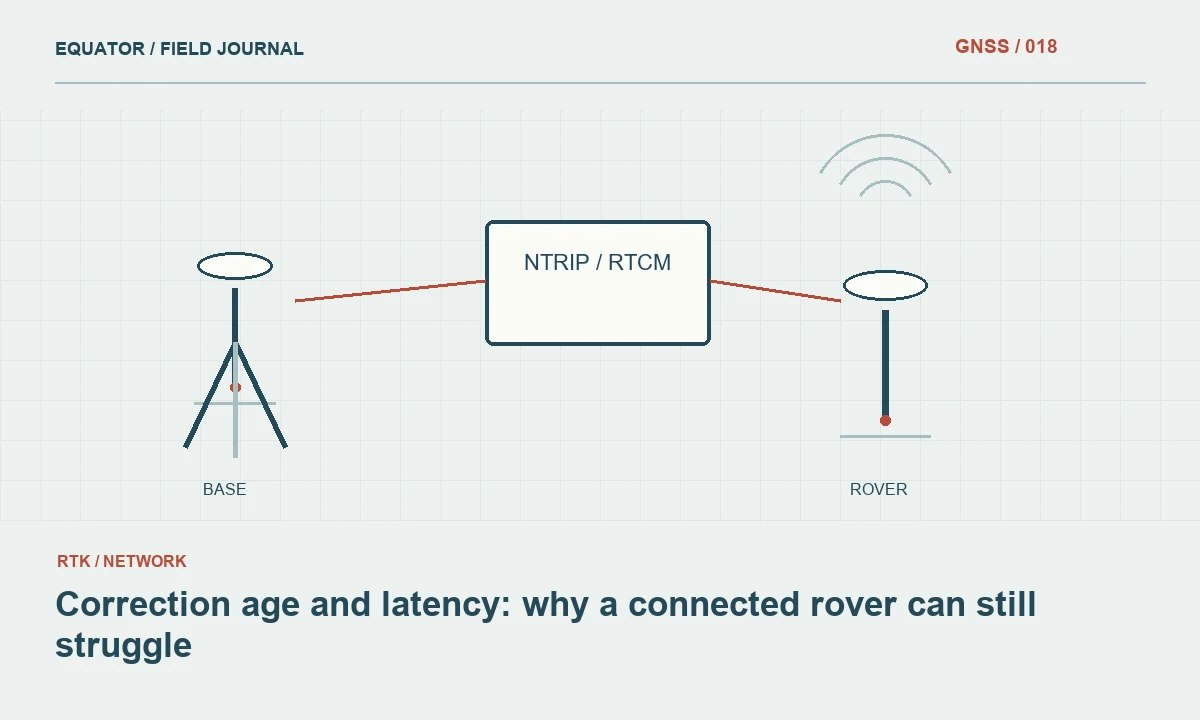
Correction age and latency: why a connected rover can still struggle
Fresh correction data and a functioning internet or radio connection are related but different checks.
Read article174 practical articles on satellite positioning, RTK corrections, survey procedures and reliable geospatial data.
157–168 of 174 articles
Page 14 of 15Fresh correction data and a functioning internet or radio connection are related but different checks.
Read articleThe communication method changes field logistics, but it does not replace measurement quality control.
Read articleA shared RTCM label is a starting point, not a complete compatibility test.
Read articleNTRIP carries GNSS data over the internet; the stream content determines how the receiver can use it.
Read articleContinuously operating stations provide reference observations; network services process or distribute them in different ways.
Read articleAntenna-height errors can persist through an otherwise good GNSS solution.
Read articleA base location should support stable mounting, useful sky visibility and reliable communication.
Read articleA precise relative measurement still depends on the base position, antenna setup and coordinate settings.
Read articleSatellite-based augmentation provides correction and integrity information, but it is different from a local RTK workflow.
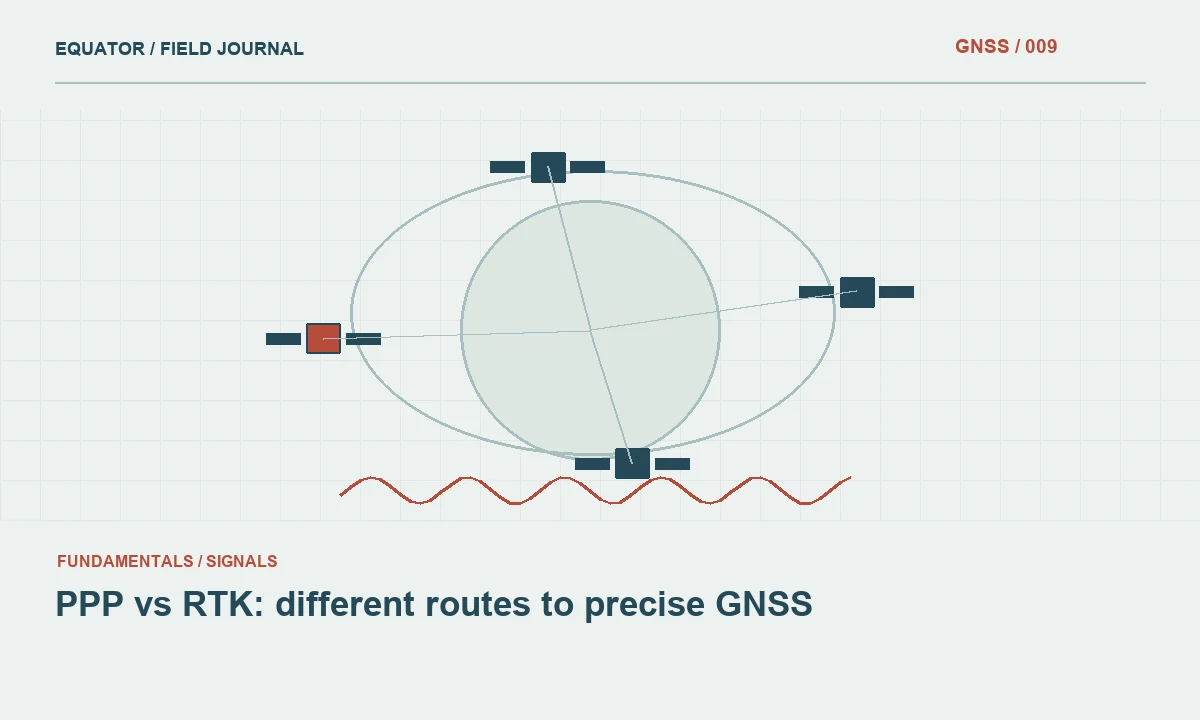
Read articlePrecise Point Positioning and RTK use different correction and estimation strategies.
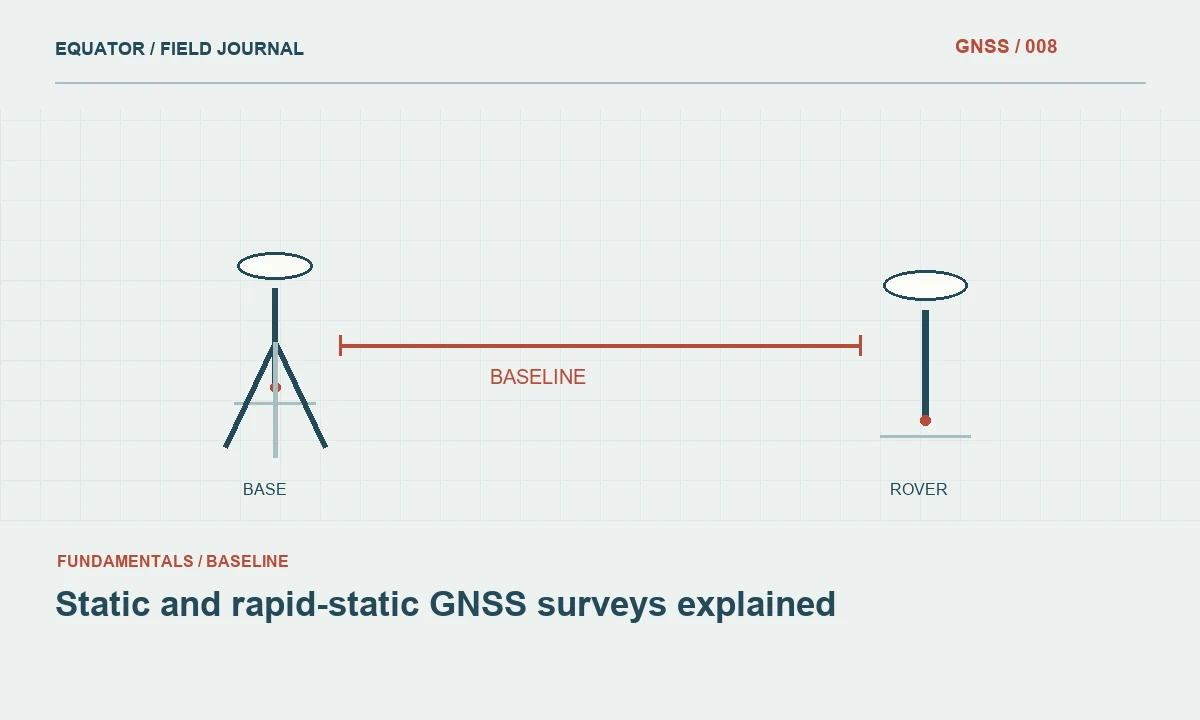
Read articleStationary observation methods need a session plan tied to baseline, geometry, obstructions and required uncertainty.
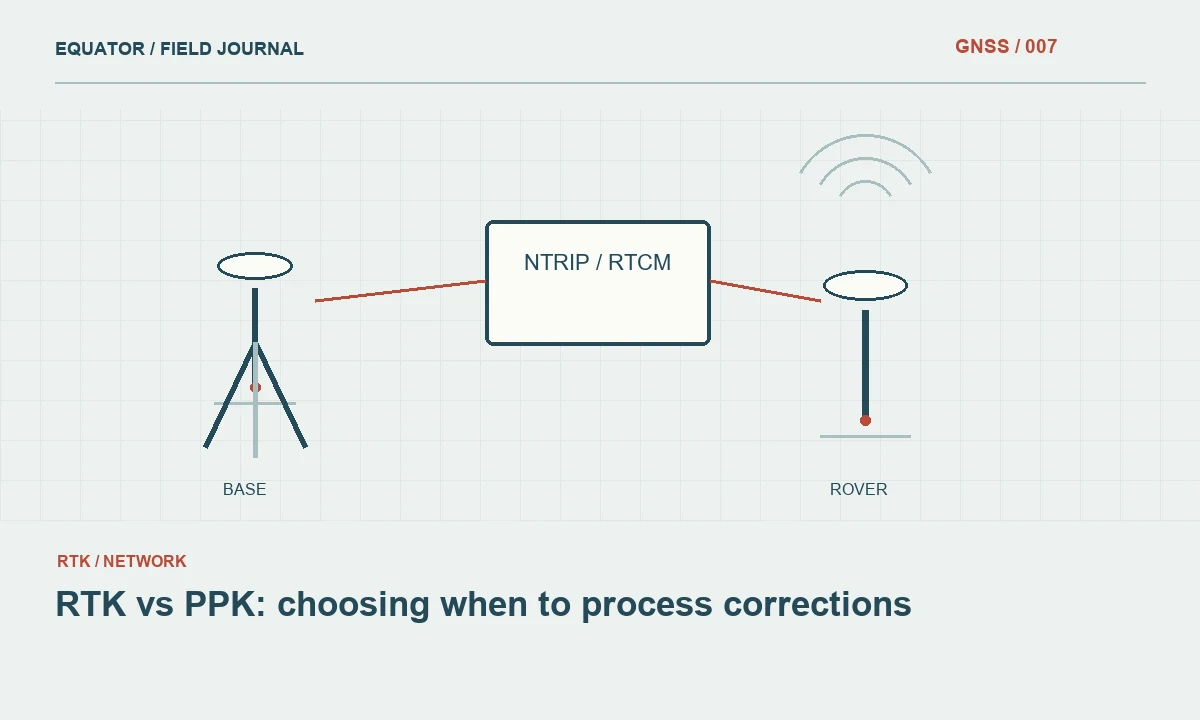
Read articleRTK provides results during collection. PPK computes positions afterward from recorded observations.
Read article