UTM coordinates: zones, hemispheres and common export mistakes
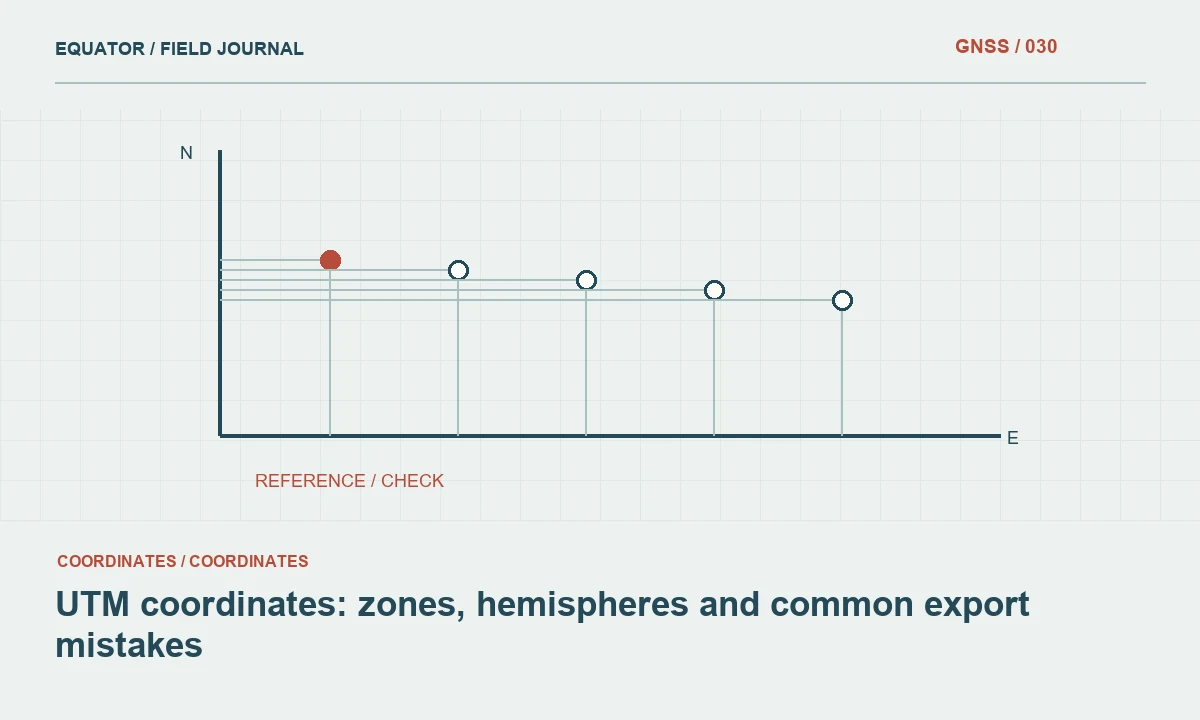
A UTM easting and northing need the correct zone, hemisphere and datum.
Read article174 practical articles on satellite positioning, RTK corrections, survey procedures and reliable geospatial data.
145–156 of 174 articles
Page 13 of 15A UTM easting and northing need the correct zone, hemisphere and datum.
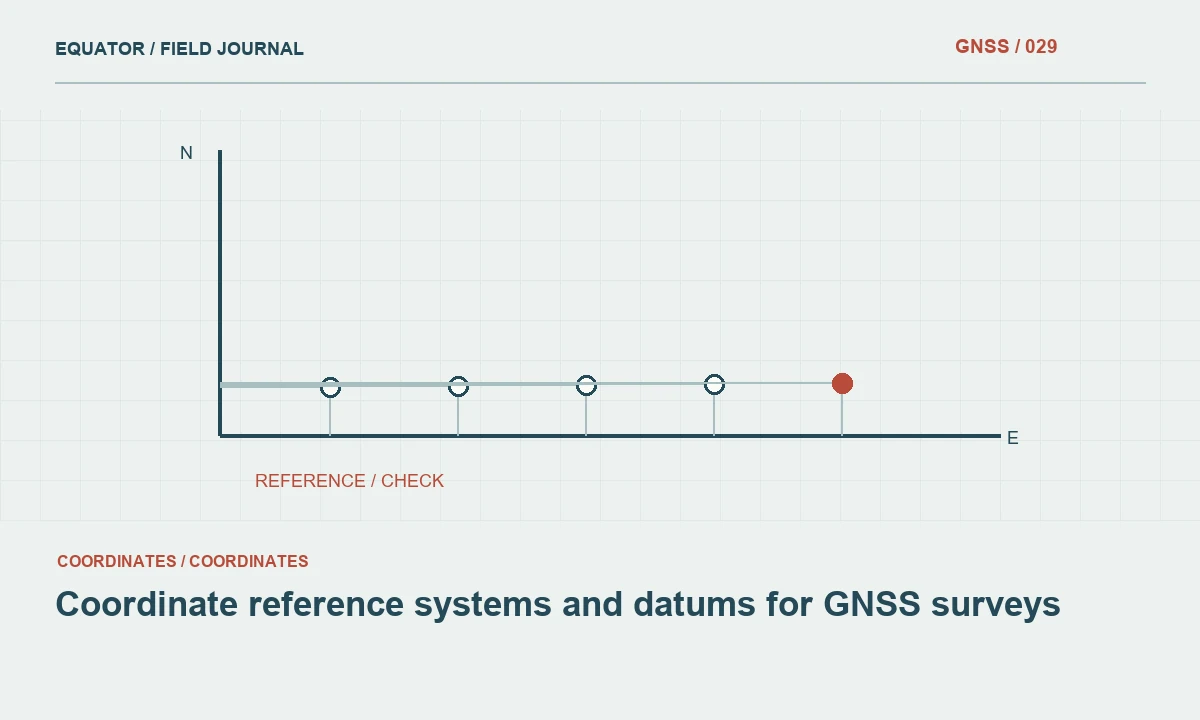
Read articleCoordinates need a reference frame, units and height definition to be interpreted correctly.
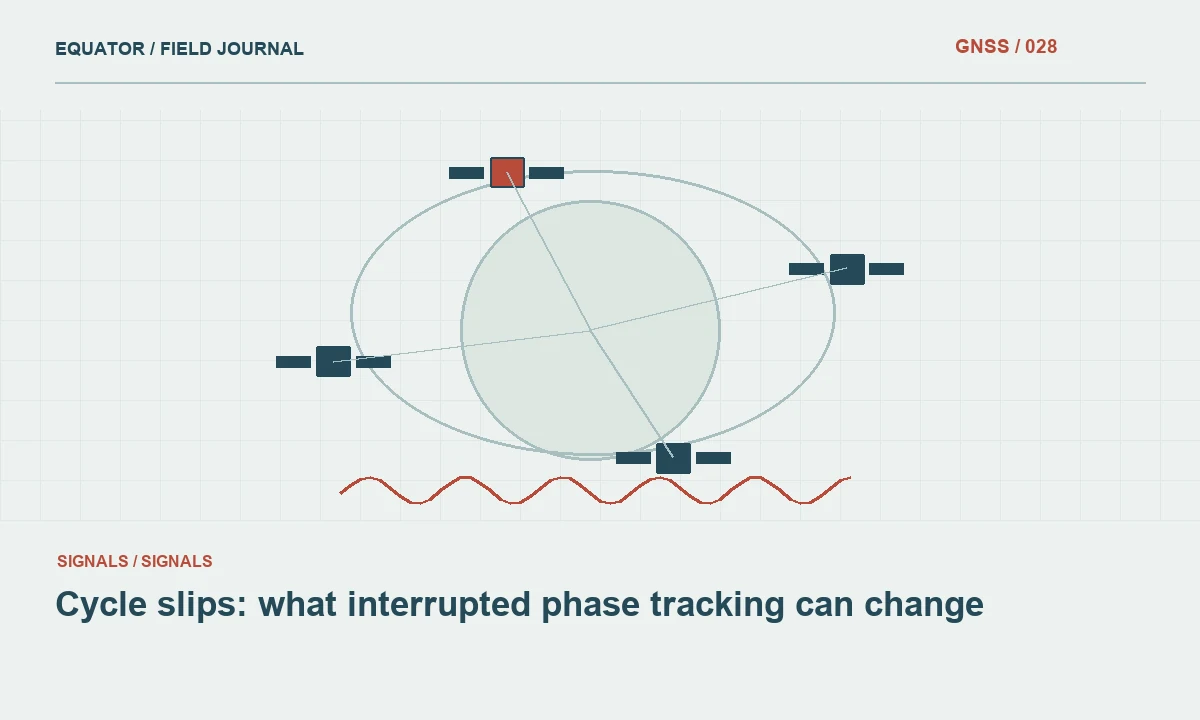
Read articleLoss of continuous carrier-phase tracking can require ambiguities to be resolved again.
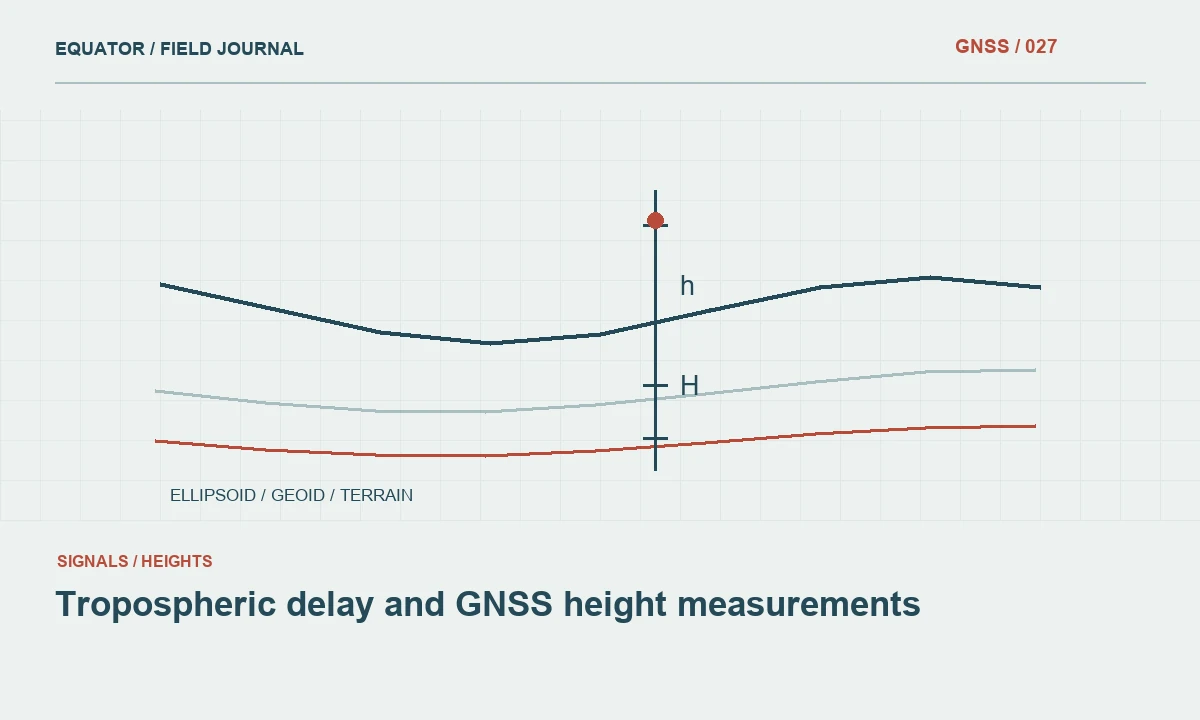
Read articleThe lower atmosphere affects GNSS signals, and height estimation needs careful modeling and field checks.
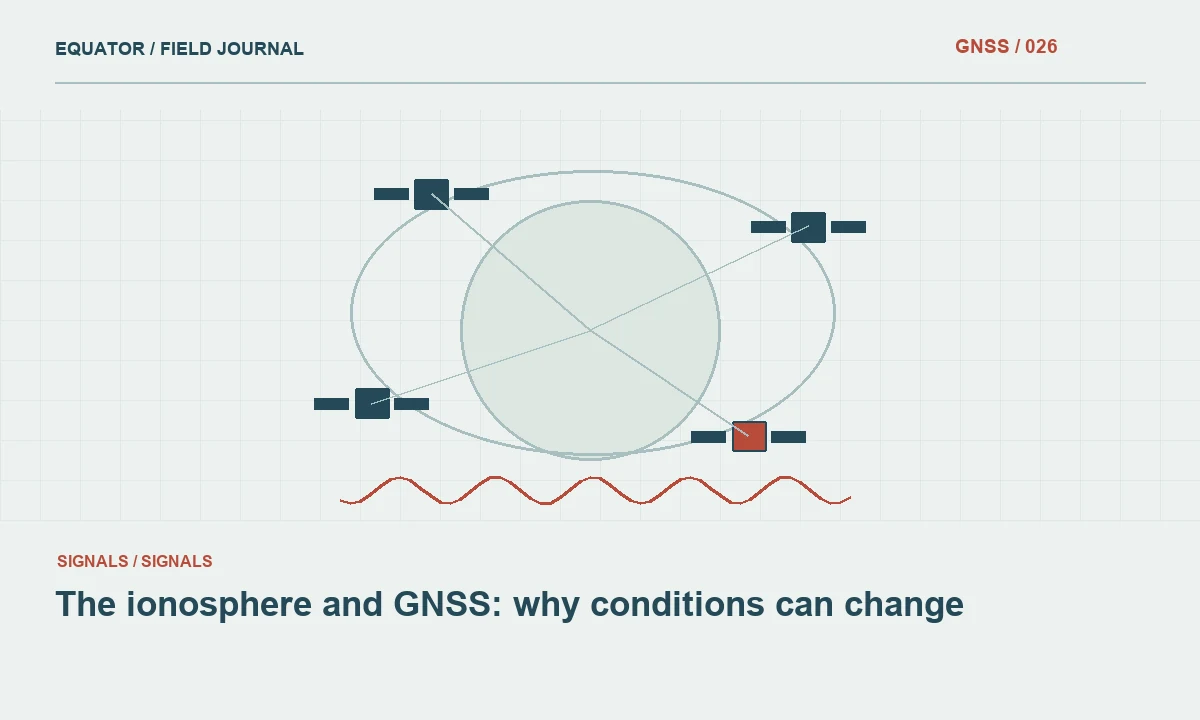
Read articleThe ionosphere affects radio-signal propagation and can change the behavior of precise positioning.
Read articleA larger satellite count can help availability, but useful observations must also be healthy and well distributed.
Read articleDilution of precision describes how observation geometry affects the position solution.
Read articleTall structures can limit satellite visibility and introduce reflections at the same time.
Read articleTrees can block or weaken signals and reduce the continuity needed for precise phase measurements.
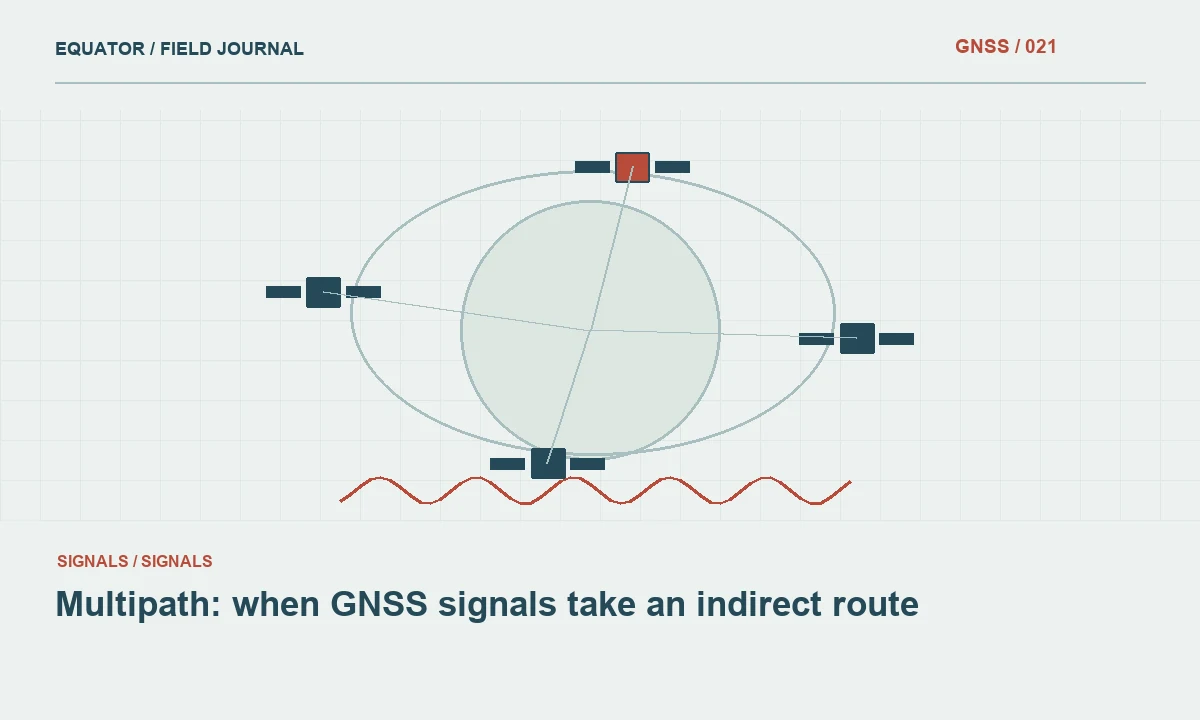
Read articleBuildings, metal surfaces and other reflectors can distort the observations a receiver uses.
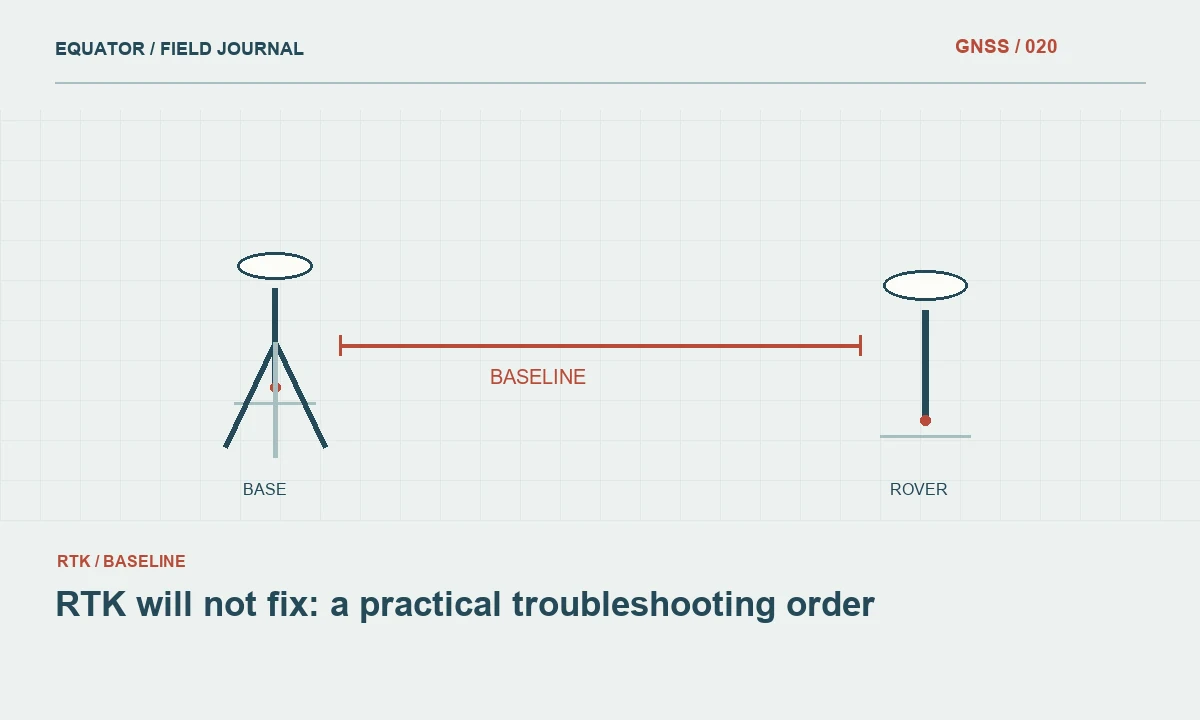
Read articleCheck the setup, correction flow and observations before repeatedly restarting equipment.
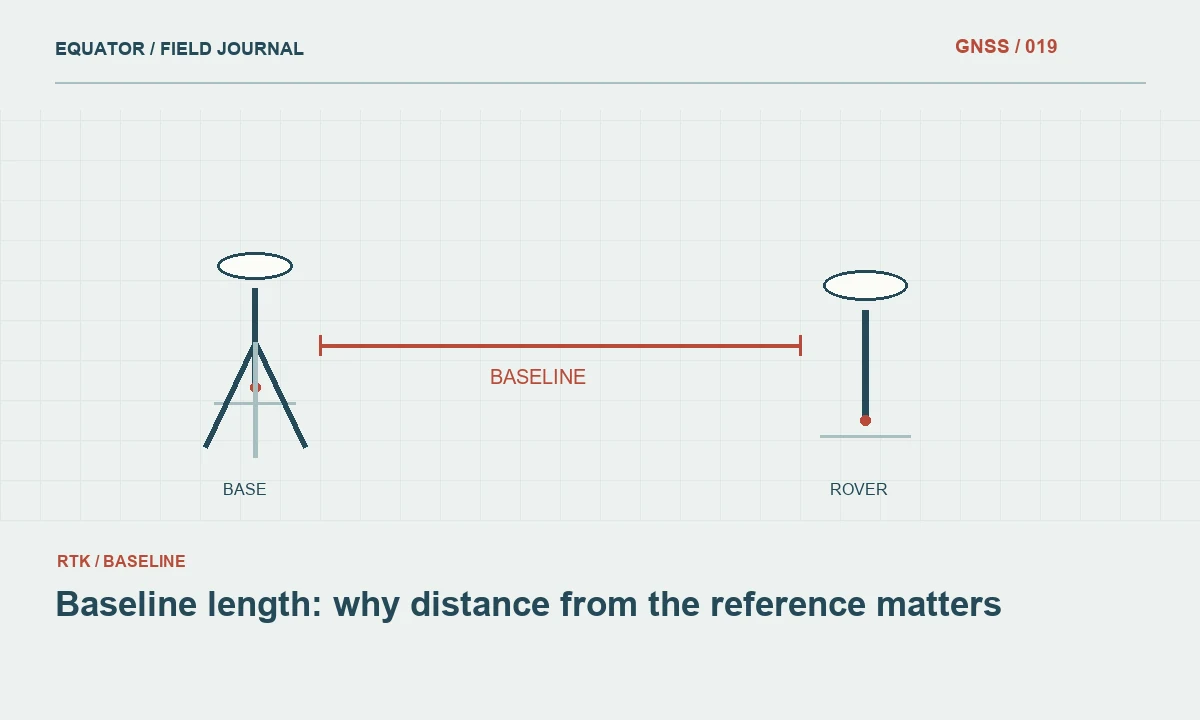
Read articleAs the rover moves away from a reference station, some shared error assumptions become less effective.
Read article