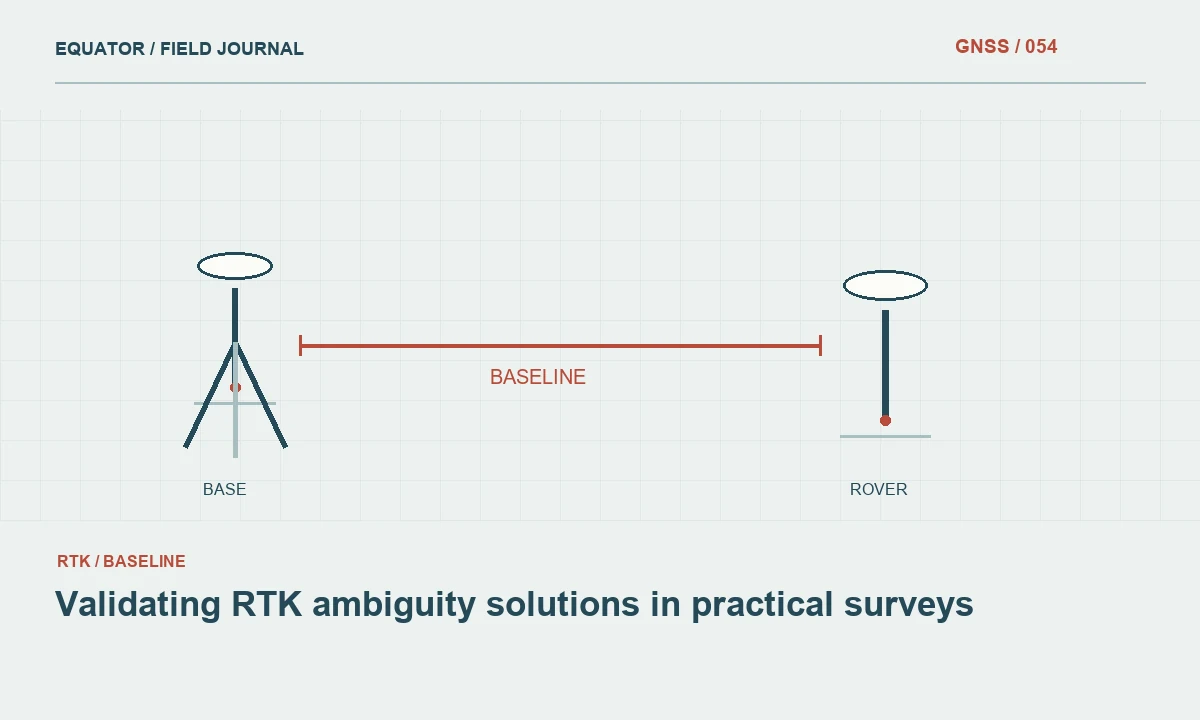
Validating RTK ambiguity solutions in practical surveys
A fixed solution is an important status indicator. Confirm its reliability through observation context, checks and controlled reinitialization.
Read article174 practical articles on satellite positioning, RTK corrections, survey procedures and reliable geospatial data.
121–132 of 174 articles
Page 11 of 15A fixed solution is an important status indicator. Confirm its reliability through observation context, checks and controlled reinitialization.
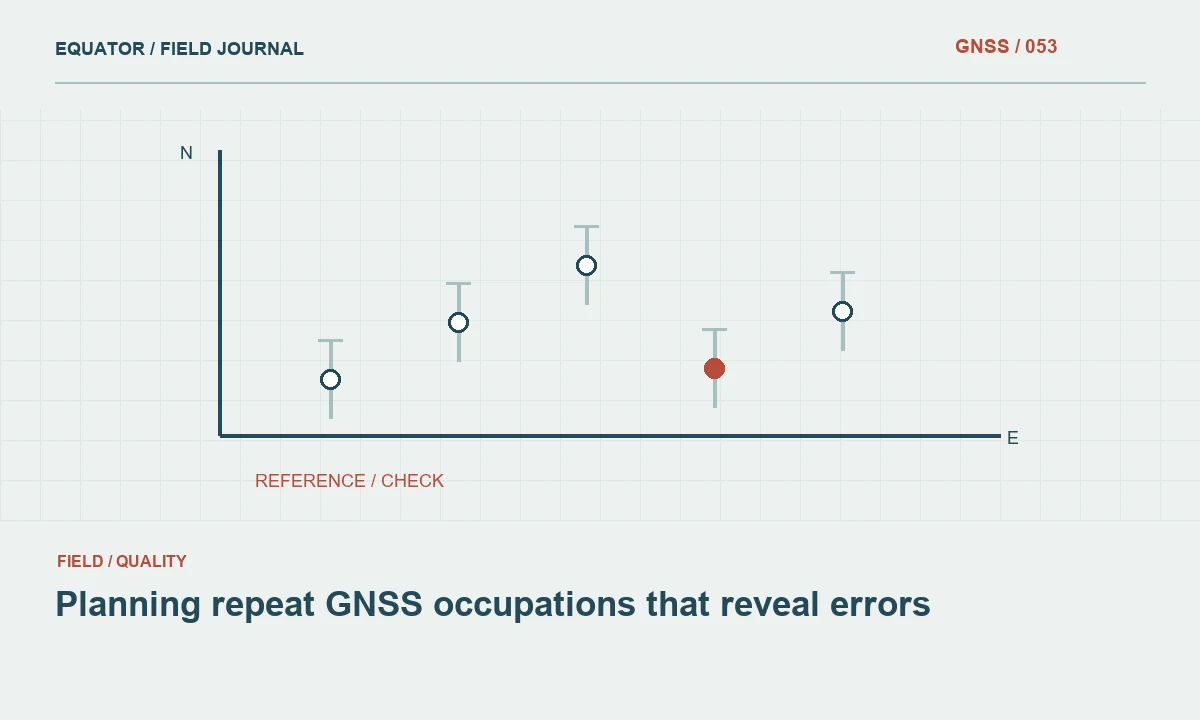
Read articleUse time separation, new setups and preserved observations to distinguish repeatability from independent agreement.
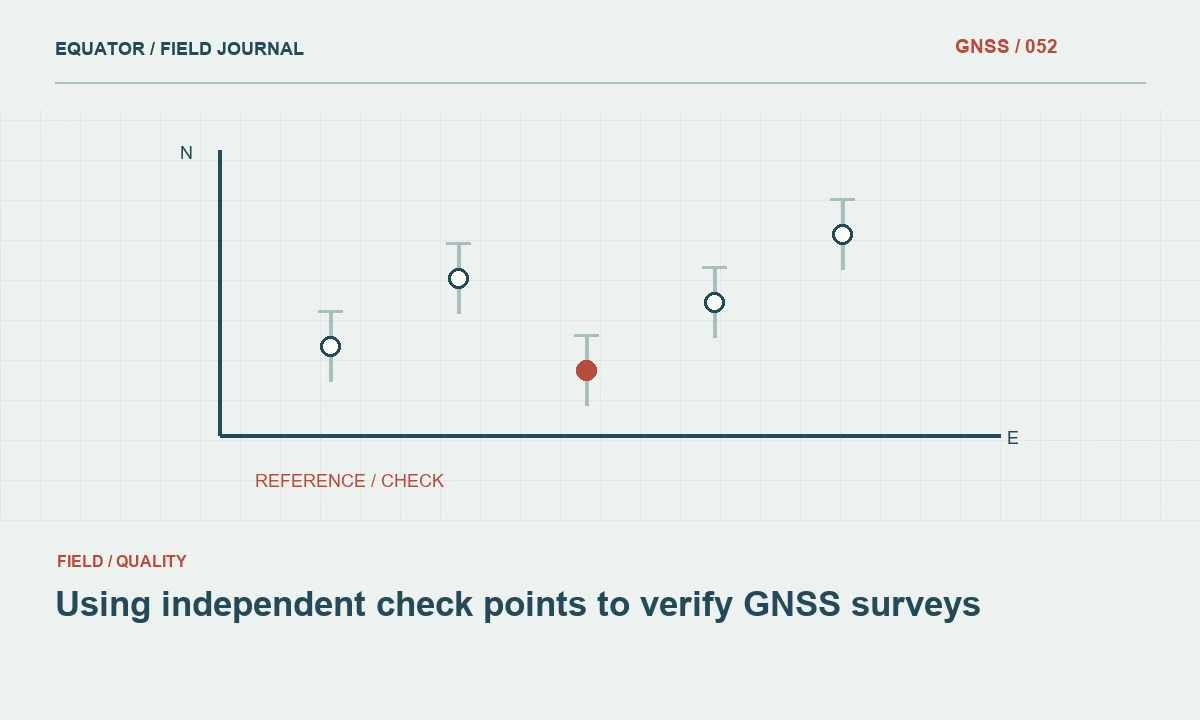
Read articleDesign checks that test the survey result without reusing the same assumptions that produced it.
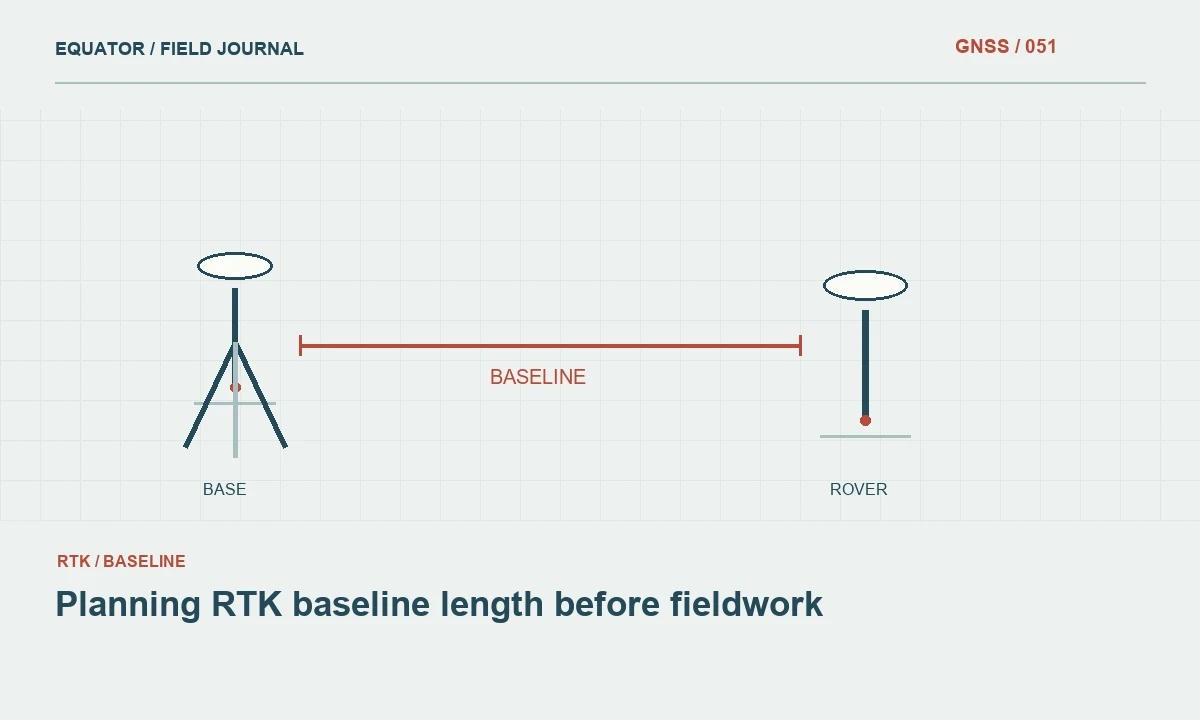
Read articleChoose a base arrangement by considering the work area, atmospheric differences, communications and independent checks rather than a single distance claim.
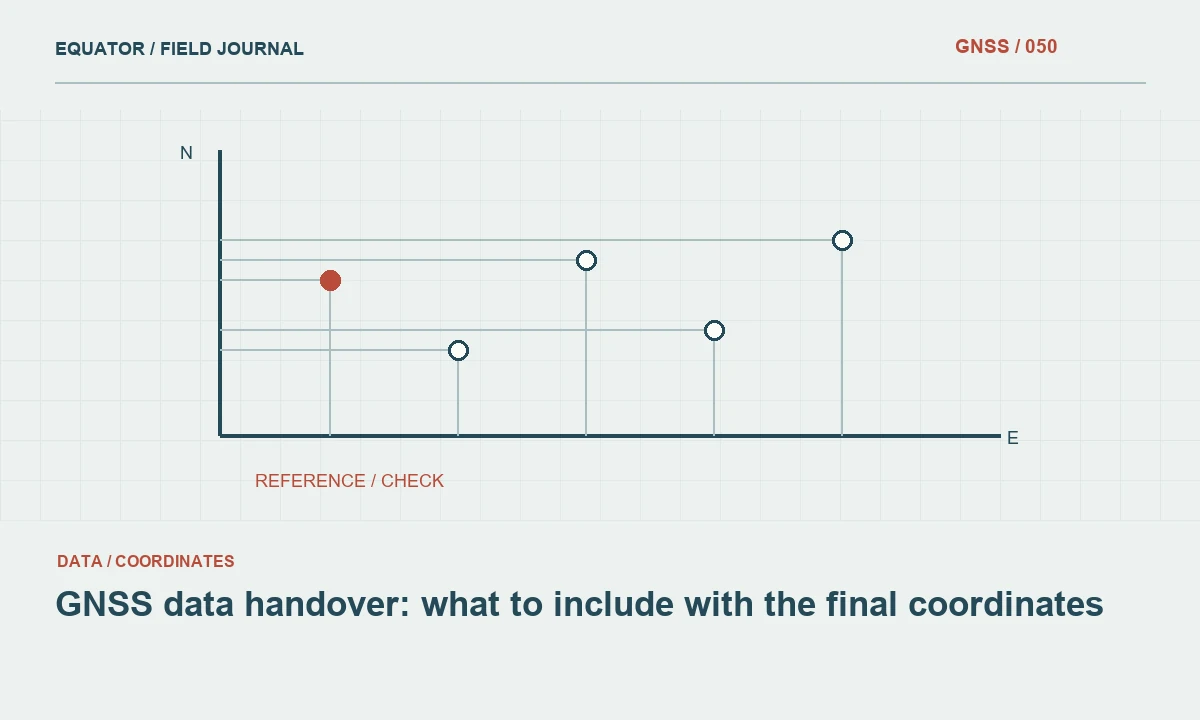
Read articleA reusable survey handover should explain how the coordinates were obtained and checked.
Read articleCompare the required observation method, communication and data features before selecting a receiver.
Read articleClose agreement between repeated coordinates is useful, but it does not prove agreement with the intended reference.
Read articleA clean coordinate export must preserve references, units, identifiers and feature attributes.
Read articlePost-processing needs compatible rover and reference observations that overlap in time.
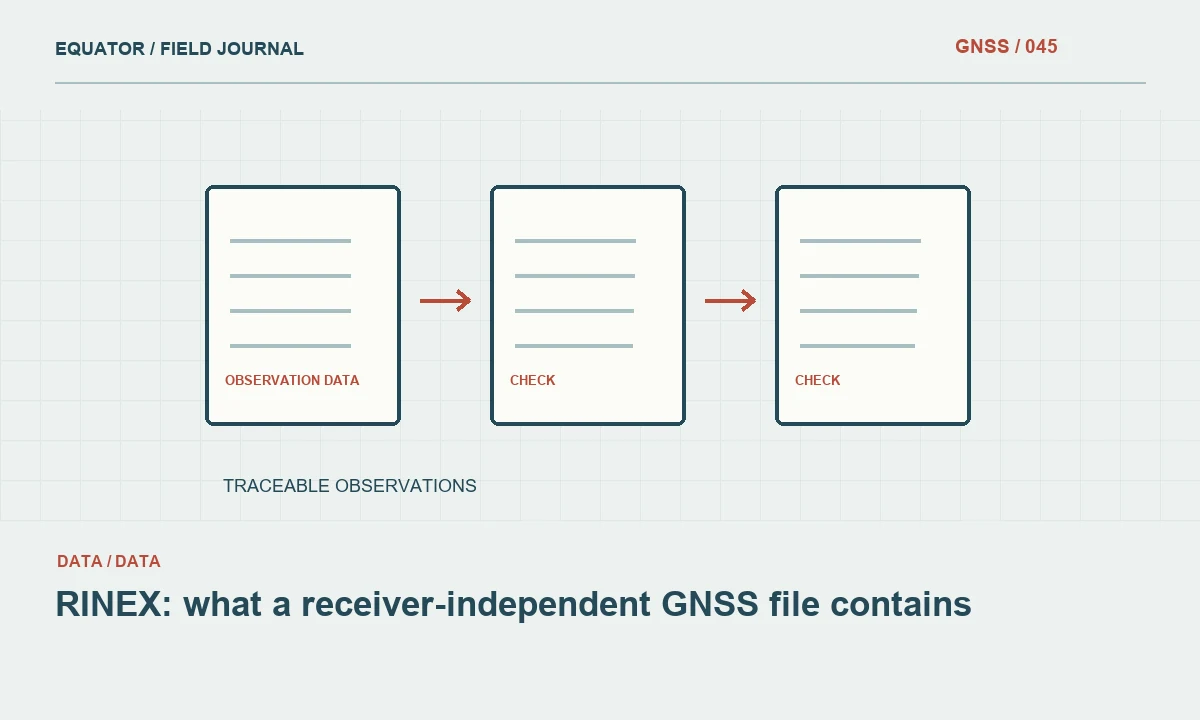
Read articleRINEX exchanges GNSS observations and navigation information; it is not simply a list of final survey coordinates.
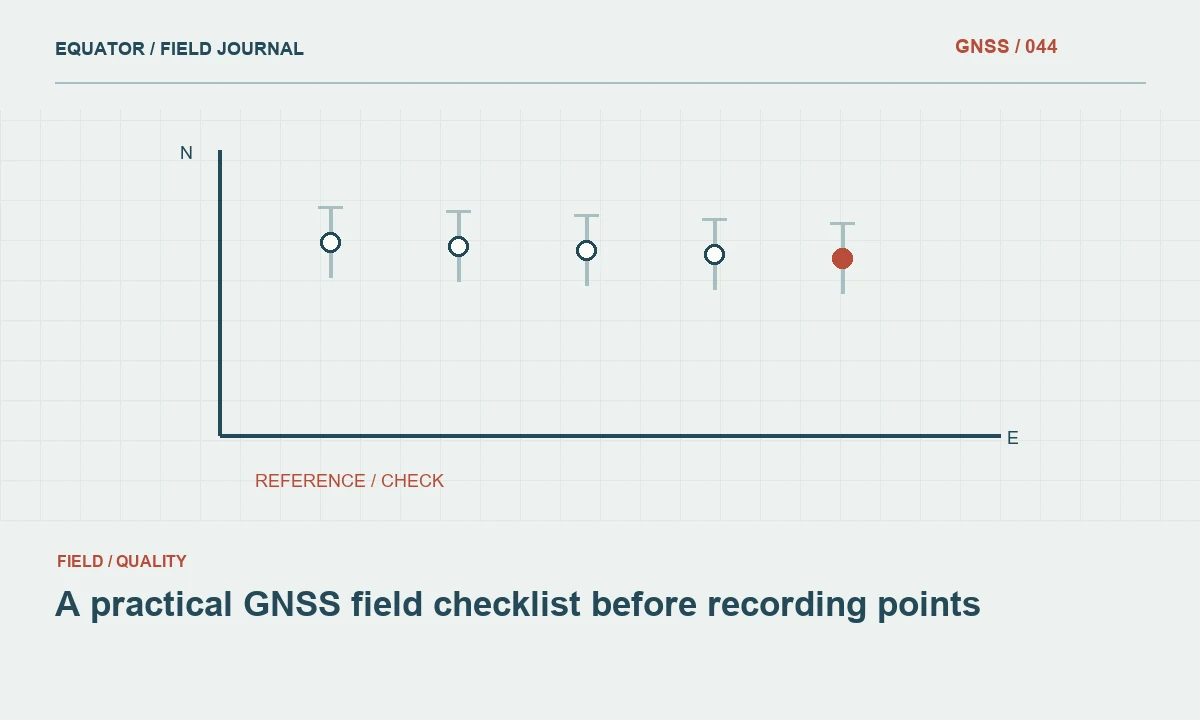
Read articleA short, repeatable setup check can prevent errors that are difficult to repair in the office.
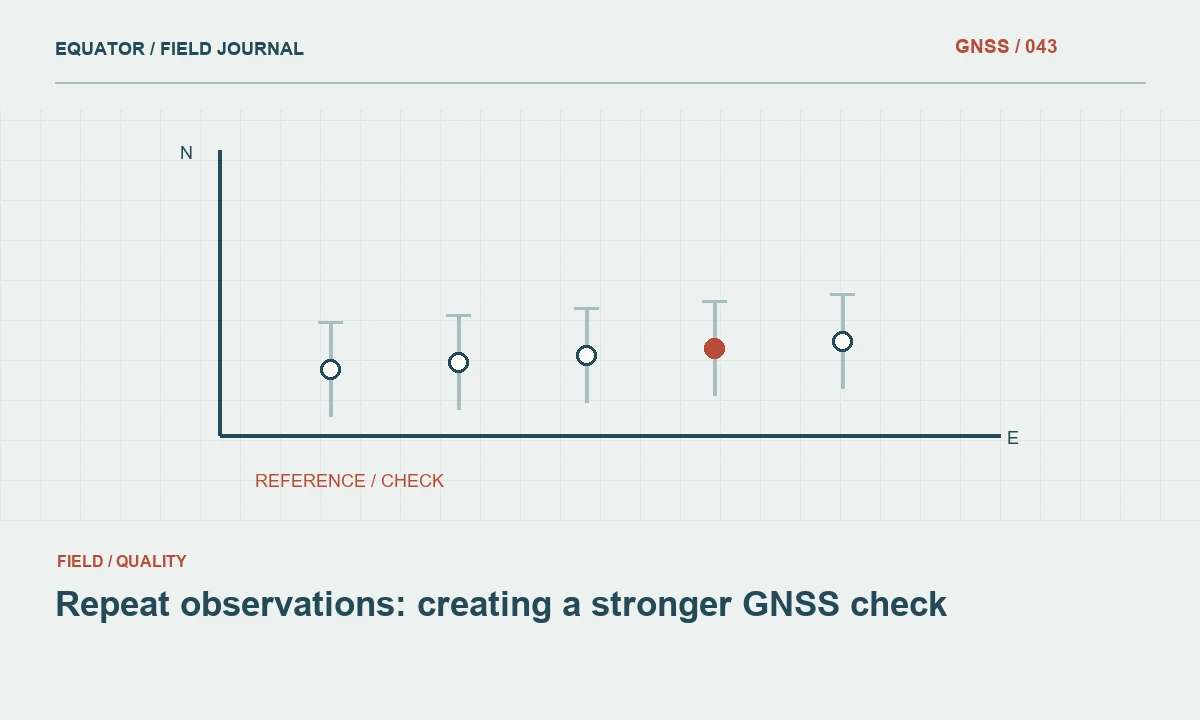
Read articleTwo observations are more useful when they can expose different errors, rather than repeating the same setup unchanged.
Read article